

It's Breanna from A Pinch of Primary and I am sharing how I take it day-by-day during my literacy centers at the beginning of the year! We are 31 days into school and we are rocking it so far!

My school follows the Daily 5 model, so we do a lot with building stamina, so we literally and figuratively take it day-by-day. I LOVE LOVE building stamina. It is such a great way to show the kids that they are capable of working for longer periods of time the harder they work. We do a lot of charting and graphing of our learning progress with data binders, so this is a GREAT way for them to see their growth and get EXCITED about learning. I am talking CHEERING and CLAPPING when our stamina chart jumps (and not just from me haha)! It's a beautiful thing when we hit 20 minutes on our stamina chart!
Now, at first, literacy stations are very basic. We start with Read to Self and the other parts of our literacy block like phonics and such just become more like mini lessons and guided practice until we really get into the nitty-gritty of Word Work, Listen to Reading, Work on Writing, etc. We do a lot of name activities at the beginning and discussing how we use our materials.
Step 1 of taking it day-by-day:
Introduce EVERY. STEP.
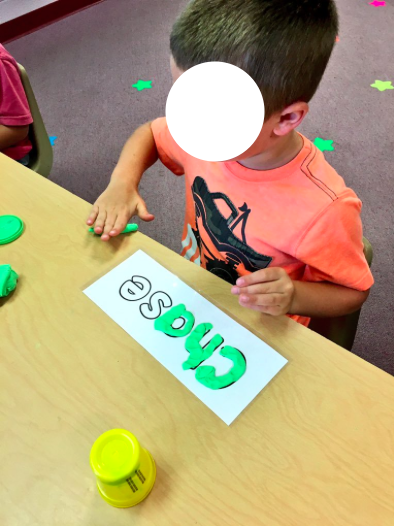
Just like every other procedure we teach, literacy stations should be treated the same way. I am oh so blessed with the only carpeted kindergarten room. Yes, it's nice and cozy for sitting on the floor, but it is not Play-Doh friendly. Play-Doh is my go-to first literacy station and you better believe we practice taking the lids off and how to pick the Play-Doh up like it's a sponge. Play-Doh is a huge hit and works so well for so many activities. I use name mats and then I introduce the placemats for Play-Doh on the floor. The key is in the details. I DO NOT have time for dried up Play-Doh week 1, so we practice it and practice it and practice it again.
Step 2 of taking it day-by-day
Don't give a million options.
Yes, if you're like me, you're remembering your now 1st grade babies and remembering how they could basically find everything and knew exactly how to do each and every station, but these adorable, new faces don't know your classroom like they do. Introduce one station and get them used to it. Then, introduce something else. I am so guilty of trying to introduce multiple things at one time to save time, but I always regret it. Give them a second to feel comfortable with the activity and then introduce something new and exciting. I PROMISE they will be PUMPED when a new activity surfaces in your literacy station area. They WILL spot that new letters game you set out. They might not be able to find their chair in the morning, but they'll usually notice something new (or maybe that's just my kids?!).
Step 3 of taking it day-by-day
Make them confident and independent in their work
Now, I think this is pretty self-explanatory. SHOW them they can be the experts. Let them be the experts. They are brilliant sponges and they can do amazing things. Now, it's not going to happen day 1. We lasted 20 seconds during literacy centers and we had JUST discussed learning to be independent readers of pictures and text. They clearly didn't get it the first time or the first 7 days, but they have now learned how and they are still learning how. Give them the ability to show you they are capable and they can do anything. (And you can get your reading groups in without little ones coming up to you with problems or questions!)
Literacy centers are time consuming, but so rewarding when you can see how how they are working and how engaged they are.
What are your tips for literacy centers at the beginning of the year?


